
Mobility as a Service (MaaS) Planning and Implementation: Challenges and Lessons Learned
In the framework of the IP4MaaS project, six MaaS demonstrations were deployed. This paper aims to describe the planning and implementation process of the MaaS pilot in Athens to provide a guideline for stakeholders. The demo site is located within the urban area of Athens, including also a small Public Transport Operator (PTO), the Municipality of Iraklio (MIRAKLIO). The municipality is located 8.5 km from central Athens.

Figure 1. Demo area map
The main objective of Athens’ demonstration was to enhance multimodality by providing integrated services, including different Transport Service Providers (TSPs), through a single application that can be used by tourists and commuters. The involved PTOs and the TSPs in the MaaS Athens demonstration site are: 1) OASA: the responsible authority for planning, coordinating, and financing the public transport system in the Athens metropolitan area, covering buses, trams, trolleys and metro, 2) MIRAKLIO: the public transport operator responsible for the buses operating within the Municipality of Iraklio, 3) BRAINBOX: a company offering bike and car-sharing services and 4) TAXIWAY: a company providing taxi services.

Figure 2. MaaS application.
The application was developed within IP4MaaS and is named Travel Companion (TC). The traveller has a variety of actions available at the so-called “shopping stage”. They may start navigation, share a particular trip with another user, or investigate the possibility of sharing a trip with other travellers. Most importantly, the traveller can book a trip or leg of a trip upon availability and purchase a ticket. During the travelling phase, the user may access a set of functions within the TC, such as travel alerts, messages, and location-based experiences (i.e., infotainment features). The provision of real-time information was not available in the phase of the demo.
Three travel cases were planned:
Case 1: Multimodal work trip – From central Athens to any other metro station;
Case 2: MaaS for tourists – From Piraeus Port to any other metro station;
Case 3: Interurban/urban interfaces – From central Athens to any other metro station or site.
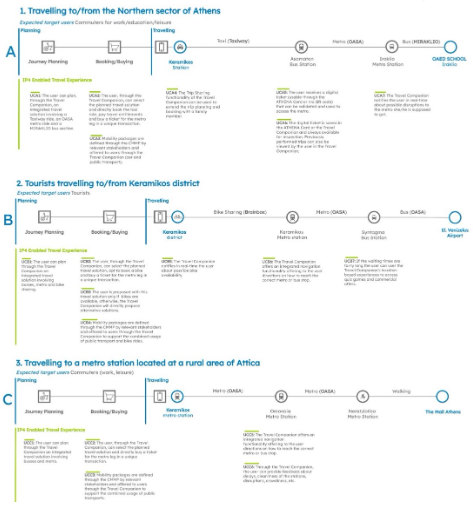
Figure 3. Use cases (UC) for Athens MaaS
The preparation process included the following:
- Introduction of “mobility package” which is a combination of fare products from the different TSPs bundled into a single product.
- Development of the journey planner which was based on the Open Trip Planner (OTP).
- QR code issuing representing a booking token for taxis or e-voucher for other modes that the user may exchange for fare products in other forms.
- Setting up a taxi booking engine that intermediate between TC app and the existing taxi dispatching center.
Prior to the initiation of the actual demo phase, a wide dissemination strategy was planned and implemented including posters, leaflets, and brochures, as well as messages presented in Variable Message Signs (VMSs), onboard screens, and at metro stations. Moreover, around 4,500 brochures were distributed to several organizations. All these were coupled with extensive dissemination actions through social media, websites of participating organizations and companies, as well as additional digital communication channels. In addition, incentives were provided, such as free public transport tickets (i.e., 27€ cards, which is the cost of a monthly ticket for all public transport modes).
Supporting evidence
The number of users that participated in the demonstration in Athens was 140, while the number of users that completed the after-demo survey was 17. This results in a response rate of 12%. According to Smartsurvey, an acceptable response rate lies somewhere between 5% and 30%, leading to the conclusion that the rate achieved in this case provides valuable feedback to base the key findings upon.
The feedback received from the survey showed that the overall feeling of the demo was very positive, as users were very excited to know that attempts were being made to develop a MaaS app for Athens. Despite the deep interest of users in implementing an app for simplifying multimodal trips in the city and its surroundings, the overall assessment of the demo execution contributed to the identification of significant challenges and therefore, to the key findings presented below.
Key findings
Most of the lessons learned through the IP4MaaS Athens demo application are valid in almost all geographical contexts and therefore, the knowledge gained may be transferred to multiple case studies dealing with the development and testing of MaaS applications. Key lessons learned may be summarized by the following:
- The absence of an existing digital ticket solution during the demo was considered a drawback as it is a key issue for integrating various travel entitlements of the TSPs into the MaaS scheme.
- Regarding the journey planning for bikes, information on bike availability and battery level should be provided to travellers through the MaaS app.
- Provision of real-time information was not available in this demo, which is considered a drawback in the implementation of a MaaS scheme. Provision of real-time information and reporting of incidents along a planned journey, especially regarding PT, is considered an essential parameter for travellers, in order for them to control their trips, and search for alternatives.
- Irrelevant to the number of companies participating and to the geographical context in which the system will be used, individual systems must be open and integrable. Restricted systems comprise a contradiction in the framework of the MaaS scheme development.
- Successful stakeholder engagement in the early stages results in a higher acceptance for MaaS.
- Incentives that were provided for promoting MaaS were positively assessed by potential users, and they urged their maintenance within the MaaS platform. Although such incentives are welcome at the beginning of a MaaS scheme, when the number of users increases it is probably not feasible to maintain them.
- Users do not like to use complex systems and they prefer to use them in their own language.

Further Reading
If you are interested in the topic, you can find additional resources and insights here:
- Becker, H., Balac, M., Ciari, F., & Axhausen, K. W. (2020). Assessing the welfare impacts of shared mobility and mobility as a service (MaaS). Transportation Research Part A: Policy and Practice.
- Polydoropoulou, A., Pagoni, I., & Tsirimpa, A. (2020). Ready for mobility as a service? Insights from stakeholders and end-users. Travel Behaviour and Society.
- Maas, B. (2022). Literature review of mobility as a service. Sustainability.
Fact sheets about relevant Horizon 2020 projects:
- MyCorridor. (2017-2020). Mobility as a service in a multimodal European cross-border corridor.
- IP4MaaS Shift2Rail. (2020-2023). IP4 to support the deployment of mobility as a service.
Reference Description
Mitropoulos, L., Kortsari, A., Mizaras, V., & Ayfantopoulou, G. (2023). Mobility as a service (MaaS) planning and implementation: Challenges and lessons learned. Future Transportation, IP4MaaS project.